In 2024, 1,886 Michigan residents died of injuries that included a traumatic brain injury; 746 of those deaths followed a fall and 189 followed a traffic crash. For every person who dies, many more survive with a brain injury that changes memory, concentration, mood, sleep, and the ability to work, often after an emergency room visit that ended with “CT negative, discharged.” A brain injury case in Michigan is two things at once: a medical case, in which the injury must be proved against insurers who call it a headache, and a benefits case, in which Michigan’s no-fault system, unusually in the country, can pay for care for the rest of your life, within limits that have changed since 2019.
This page explains how a traumatic brain injury meets Michigan’s injury threshold, what no-fault pays for brain injury care and where the caps are, how a mild TBI is proved when imaging is normal, what the 2019 reforms and the Andary decision mean for catastrophic cases, guardianship and settlement rules for an injured adult who cannot manage their own affairs, and the deadlines.
ATLAW is a personal injury firm in Dearborn. In 13 years the firm has handled more than 10,000 cases and recovered more than $100 million for clients across Wayne, Oakland, Macomb, and Washtenaw counties. Brain injury cases are handled on contingency: no fee unless we recover money for you, and the first conversation is free.
Brain injury in Michigan: the numbers
| Measure | Figure | Source |
|---|---|---|
| TBI-related deaths, Michigan, 2024 | 1,886 (16.2 per 100,000) | MDHHS vital statistics |
| TBI deaths following a fall | 746 | MDHHS |
| TBI deaths following a transport crash | 189 | MDHHS |
| People injured in crashes in Wayne, Oakland, Macomb and Washtenaw counties, 2024 | 34,424, including 1,965 suspected serious injuries | Michigan State Police |
| Statewide crash injuries, 2024 | 71,316 | Michigan State Police |
| Fall-related emergency visits, Michigan, 2024 | 236,773 | Michigan Falls Prevention Week proclamation |
Crashes and falls are the two causes behind most Michigan brain injury claims; assaults, sports and school injuries, workplace injuries, and medical errors account for the rest.
What a traumatic brain injury is, and why “mild” is misleading
A traumatic brain injury is a disruption of brain function caused by an external force: a blow, a jolt, a penetration, or the rapid acceleration and deceleration of a crash, in which the brain moves inside the skull and nerve fibers stretch and shear. Severity is graded at the emergency room by the Glasgow Coma Scale: mild (13–15), moderate (9–12), severe (3–8). “Mild” describes the initial presentation, not the outcome. A mild TBI, which includes concussion, can produce persistent headaches, memory and attention problems, slowed processing, irritability, depression, sleep disturbance, light and noise sensitivity, and loss of smell, lasting months or permanently. CT and standard MRI are often normal in mild TBI because they do not image the microscopic axonal injury that causes the symptoms.
That gap, between a normal scan and a changed person, is where brain injury cases are fought.
The injury threshold: how a brain injury qualifies
To recover pain and suffering from the at-fault driver in a Michigan crash, your injury must be a serious impairment of body function, permanent serious disfigurement, or death (MCL 500.3135(1)). The Michigan Supreme Court’s test, now written into the statute, has three parts (McCormick v Carrier, 2010; MCL 500.3135(5)):
- An objectively manifested impairment, meaning one that is observable or perceivable from actual symptoms or conditions by someone other than the injured person;
- of an important body function, which brain function plainly is;
- that affects the person’s general ability to lead his or her normal life, comparing life before and after the injury. No specific duration or permanence is required.
A brain injury meets the first element through the evidence described below, not through the patient’s report alone, and the third through the documented change in work, family roles, driving, and daily activities. Pain and suffering recovered from the at-fault driver is reduced by any comparative fault and barred above 50% (MCL 500.3135(2)(b)); it is not capped. Brain injuries from falls, assaults, defective products, and medical errors have no threshold requirement; they proceed on ordinary negligence rules.
Proving a brain injury when the scan is normal
| Evidence | What it shows |
|---|---|
| Emergency and EMS records | Loss of consciousness, confusion, amnesia around the event, Glasgow Coma Scale score, mechanism of injury |
| Neuropsychological testing | Standardized measures of memory, attention, processing speed, and executive function, with validity testing that answers the “malingering” defense before it is raised |
| Advanced imaging | Diffusion tensor imaging (DTI), susceptibility-weighted MRI, and in some cases PET, which can show axonal injury and microbleeds that CT misses |
| Treating specialists | Neurology, physiatry, neuropsychology, and speech-language pathology records tracking symptoms over time |
| Vestibular and vision testing | Balance and oculomotor deficits common after concussion |
| Before-and-after witnesses | Family, co-workers, teachers, and coaches who describe the change; school and employment records that document it |
| Prior medical records | To show the symptoms are new, and to meet the aggravation argument head-on |
Insurers defend brain injury claims by calling the symptoms subjective, pre-existing, psychological, or exaggerated, and by hiring an examiner to say so. The answer is a record built early: a neuropsychological evaluation in the first months, treating specialists rather than urgent care, and symptom documentation that begins before anyone is thinking about a lawsuit.
What no-fault pays for a brain injury
Michigan’s no-fault act is the reason the state developed a dense network of post-acute brain injury rehabilitation programs: for decades, PIP paid for lifetime care without a dollar limit. The benefits still exist; the limits now depend on when you were injured and what coverage you chose.
- Medical and rehabilitation expenses: all reasonably necessary products, services, and accommodations for care, recovery, or rehabilitation (MCL 500.3107(1)(a)), which in brain injury cases includes inpatient and residential rehabilitation, outpatient cognitive therapy, case management, home modifications, transportation, and medications, up to the PIP medical limit on the policy: $50,000 (Medicaid enrollees), $250,000, $500,000, or unlimited (MCL 500.3107c). If no choice was made, the policy is unlimited. A person with a $250,000 limit who suffers a severe brain injury will exhaust it within months, and care after that depends on health insurance, Medicaid, and the claim against the at-fault driver for excess medical expenses (MCL 500.3135(3)(c)).
- Attendant care: in-home supervision and assistance, which a person with a moderate or severe TBI may need around the clock. Care by family members is capped at 56 hours a week (MCL 500.3157(10)); hours beyond that must be provided by an agency, which is paid under the fee schedule.
- Wage loss: 85% of lost income up to $7,455 a month for crashes on or after October 1, 2026, for three years (MCL 500.3107(1)(b)). Brain injuries end careers; losses beyond the cap and the three years are claimed from the at-fault driver.
- Replacement services: $20 a day for three years for household tasks.
- Case management and guardianship costs where reasonably necessary to the injured person’s care.
The claim is made to your own insurer, a household insurer, or the Assigned Claims Plan (capped at $250,000), with written notice within one year (MCL 500.3145). Our no-fault insurance claim page covers the insurer’s 30-day payment duty and the penalties for delay.
The 2019 reforms and Andary v USAA
The 2019 amendments did two things that fell hardest on brain injury survivors. They capped family attendant care at 56 hours a week, and they imposed a fee schedule that pays providers of services without a Medicare code, which includes most residential brain injury programs and agency attendant care, 52.5% of their 2019 charges (MCL 500.3157(7)). Programs closed and patients were discharged.
In Andary v USAA (July 31, 2023), the Michigan Supreme Court held that the fee schedule and the 56-hour cap do not apply to people injured before June 11, 2019, whose benefits are governed by the policy and law in effect when they were hurt. A person catastrophically injured in 2015 keeps uncapped attendant care and provider payment at reasonable charges; a person injured in 2020 does not. For catastrophic claims under policies with unlimited coverage, the insurer is reimbursed above a per-claim retention, $675,000 for policies issued or renewed from July 1, 2025 through June 30, 2027, by the Michigan Catastrophic Claims Association, which is why unlimited coverage remains available at all.
When the injured person cannot manage their own claim
A moderate or severe brain injury often leaves an adult unable to make medical, financial, or legal decisions. Michigan law provides for a guardian to make personal and medical decisions for an incapacitated adult (MCL 700.5306) and a conservator to manage property and settlements (MCL 700.5401), appointed by the probate court. A settlement for a legally incapacitated person must be approved by the court, and the funds are protected in a conservatorship or a special needs trust so that Medicaid and SSI eligibility are preserved. ATLAW works with its probate team to coordinate guardianship and conservatorship petitions where they are needed, alongside the no-fault claim, the lawsuit, and the public-benefits planning.
Deadlines are not automatically extended. Michigan tolls the three-year lawsuit period for a person who is “insane,” meaning unable to comprehend their rights, at the time the claim accrues (MCL 600.5851), but the Supreme Court has held that no such tolling applies to the no-fault one-year notice and one-year-back rules (Joseph v ACIA, 2012). The PIP claim must be filed within a year even for a person in a coma, by family or a guardian.
Brain injuries from causes other than crashes
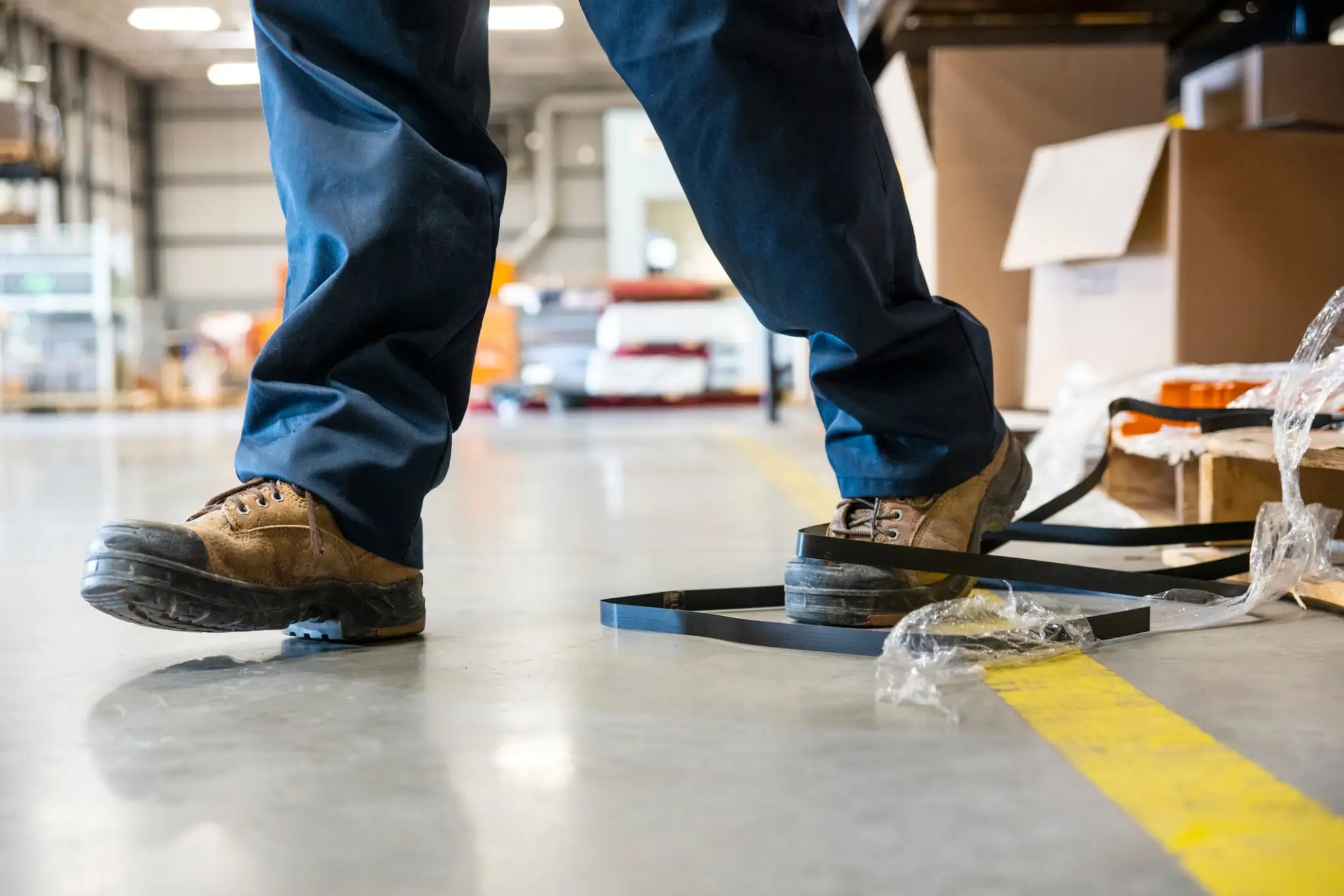
- Falls are Michigan’s leading cause of TBI death. A fall on unsafe property is a premises claim, with no threshold requirement and, since 2023, no “open and obvious” dismissal (Kandil-Elsayed v F & E Oil). See our premises liability page.
- Assaults in negligently secured apartments, bars, and parking lots; see the negligent security discussion on the same page, and the Crime Victim Services Commission for compensation when the assailant is uninsured.
- Sports and school. Michigan’s youth sports concussion law requires removal from play and written clearance by a health professional before return (MCL 333.9155–333.9156). A second-impact injury after a coach ignored the rule is a negligence claim, subject to governmental immunity rules for public schools.
- Workplace brain injuries are workers’ compensation claims against the employer and product or premises claims against third parties; see our workers’ compensation page.
- Medical errors: a missed brain bleed, a delayed CT, an anesthesia event, or a birth injury causing hypoxic brain damage. See our medical malpractice page; the two-year period and the notice of intent apply.
- Defective products: airbags that fail to deploy, helmets, car seats, and seat backs. See our product liability page.
- Nursing home falls with head injury; see our nursing home abuse page.
What a Michigan brain injury case is worth
A brain injury case has more components than most injury claims, and each is valued:
- No-fault benefits: lifetime (or to the policy limit) medical and rehabilitation care, attendant care, wage loss, replacement services.
- Economic losses beyond PIP from the at-fault party: wage loss above the cap and after three years, lost earning capacity over a working life, and medical and attendant care after the PIP limit is exhausted. These are projected by a life care planner and a vocational economist, and in a severe TBI case they run to seven figures.
- Non-economic damages: pain and suffering, loss of enjoyment of life, loss of the ability to think, remember, and relate as before, and a spouse’s loss of consortium. Not capped in Michigan crash, premises, or assault cases; capped in product and medical malpractice cases.
- Wrongful death damages where the injury was fatal (MCL 600.2922); see our wrongful death page.
The constraint, as in every Michigan case, is coverage: the at-fault driver’s limits (often $50,000), the owner’s policy, employer policies, and your own underinsured motorist coverage. Identifying every policy in a brain injury case is the first task after the medical record.
Deadlines for Michigan brain injury claims
| Deadline | Time | Statute |
|---|---|---|
| Written notice to the no-fault insurer | 1 year from the crash, not extended for incapacity | MCL 500.3145(1); Joseph v ACIA (2012) |
| Lawsuit for unpaid PIP benefits | 1 year from each unpaid benefit | MCL 500.3145(2) |
| Lawsuit against the at-fault driver, property owner, or assailant | 3 years from the injury | MCL 600.5805(2) |
| Tolling for an incapacitated (“insane”) adult or a minor | Period extended; 1 year after the disability is removed, or to age 19 | MCL 600.5851 |
| Medical malpractice (missed bleed, birth injury) | 2 years, with a 182-day notice of intent | MCL 600.5805(8), 600.2912b |
| Product liability | 3 years | MCL 600.5805 |
| Government notice (bus, city vehicle, sidewalk, school) | 60 days to 120 days depending on the defendant | MCL 124.419, 691.1404 |
| Wrongful death | 3 years, with saving provisions for the estate | MCL 600.5805, 600.5852 |
Why metro Detroit brain injury clients call ATLAW
- Thirteen years, more than 10,000 cases, more than $100 million recovered.
- The medical record is built, not assumed. Neuropsychological evaluation, specialist referrals, and advanced imaging where appropriate.
- Life care planning and economic projection, where the case calls for it, for the losses no-fault does not cover.
- Guardianship, settlement approval, and benefits protection coordinated with the injury case.
- Both claims, one firm. The no-fault claim, including attendant care and residential rehabilitation disputes, and the claim against the at-fault party, run together.
- Dearborn, and the whole metro area. Our office is at 3 Parklane Blvd., Suite 400W, Dearborn, MI 48126. Clients come from Detroit, Dearborn, Southfield, Warren, Sterling Heights, Troy, Pontiac, Canton, Ann Arbor, and Ypsilanti. We welcome clients to our Dearborn office for a consultation. If you are unable to visit, home, hospital, or rehabilitation facility visits can be arranged as needed.
- Languages. Consultations and intake are available in English, Arabic, French, Mandarin, Urdu, and Spanish.
- No fee unless we recover. ATLAW advances case costs, so you pay nothing up front; the 33.3% attorney fee is calculated on the recovery after those costs are deducted, and if there is no recovery you owe no fee and no costs. No cost for the first conversation.