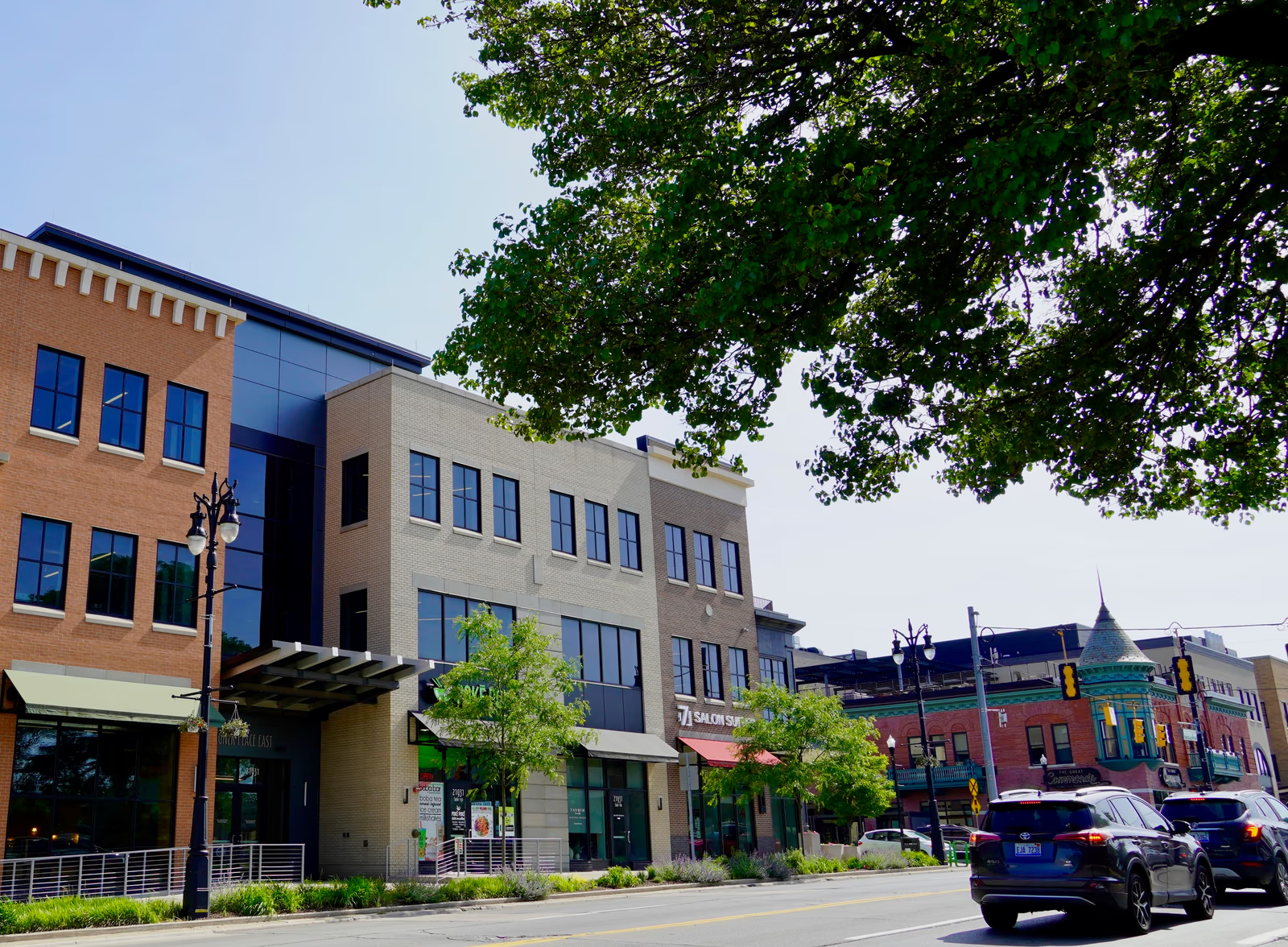
An Uber or Lyft crash in Dearborn is a Michigan no-fault car crash with one added question that decides what the claim is worth: what was the app doing at the moment of impact? If a ride had been accepted or a passenger was on board, a $1 million policy applies. If the driver was logged in and waiting, only the Act’s minimum limits apply. Uber and Lyft hold the record that answers the question, and they do not volunteer it. Dearborn produces more of these cases than its size suggests: the I-94 corridor to Detroit Metropolitan Airport runs across the south of the city, the east-side restaurant district along Michigan Avenue and Warren fills rideshare queues every evening, and many Dearborn residents drive for the platforms themselves.
ATLAW is a personal injury firm at 3 Parklane Boulevard in Dearborn. In 13 years the firm has handled more than 10,000 cases and recovered more than $100 million for clients. Our Michigan Uber and Lyft accident lawyer page covers the Transportation Network Company Act and the three insurance periods in full, our Dearborn car accident page covers the no-fault rules for any Dearborn crash, and our Dearborn page covers every kind of injury claim in the city. The first conversation is free, in English, Arabic, French, Mandarin, Urdu, or Spanish: (313) 406-7606.
The three periods, and how to prove which one applied
Michigan regulates Uber, Lyft, and similar companies as transportation network companies under 2016 PA 345, MCL 257.2101 and following. The Act requires insurance in three periods (MCL 257.2123):
| Period | What the driver was doing | Coverage | Who provides it |
|---|---|---|---|
| App off | Personal driving | Driver’s personal policy; Michigan minimum $50,000 / $100,000 | Driver’s insurer, which may exclude rideshare use |
| App on, no ride accepted | Logged in, waiting for a request | $50,000 per person / $100,000 per crash / $25,000 property damage, plus PIP and PPI | Uber or Lyft, or the driver’s rideshare endorsement |
| Ride accepted or passenger on board | En route to pick up, or carrying a passenger | $1,000,000 combined, plus PIP and PPI | Uber or Lyft |
The moment the driver accepts a ride, the $1 million policy attaches and stays attached until the passenger is dropped off. The gap period, app on with no ride, has coverage only at the Act’s minimums, which is why a serious injury in that period usually turns on the injured person’s own uninsured and underinsured motorist coverage.
Proving the period. Uber and Lyft keep trip logs, GPS traces, and timestamps for every driver session. We send a preservation letter to the company and its insurers for the trip data, followed by a subpoena if necessary. Screenshot the trip screen, the driver’s name and photo, the plate, the route, and the time before you leave the scene; it is the one piece of evidence the companies will not preserve for you.
Who pays your medical bills
If you were a passenger. Michigan no-fault pays your medical expenses and wage loss regardless of fault, but being a paying customer does not put Uber’s insurer first in line. Your own auto policy pays first, or a policy held by your spouse or a relative you live with; if there is none, you claim through the Michigan Assigned Claims Plan (MCL 500.3114, as amended by 2016 PA 345; MCL 500.3172). Written notice to the responsible insurer is due within one year (MCL 500.3145(1)). See our no-fault insurance claim page and passenger injury page.
If you were the rideshare driver. Your own policy pays PIP if it does not exclude rideshare use; if it does, the company’s policy covers PIP while the app is on. Drivers are generally independent contractors under the Act, so there is usually no workers' compensation claim, which makes the PIP claim and the claim against the at-fault driver everything. A personal policy can be rescinded if rideshare use was misrepresented when the policy was bought. Many Dearborn drivers work the airport run; a crash on I-94 with a passenger on board is a $1 million-policy case for the passenger and a PIP-plus-UM case for the driver.
If you were in another car, on a bike, or on foot. Your own no-fault insurer pays your benefits, as in any crash (or the priority chain under MCL 500.3114 and 3115 for pedestrians and cyclists). The rideshare period decides which liability policy you claim against. See our pedestrian accident page.
Your claim for pain and suffering
For pain and suffering and economic losses beyond no-fault, you need a threshold injury under MCL 500.3135 (death, serious impairment of body function, or permanent serious disfigurement) and three years to file (MCL 600.5805(2)); a fatal crash is brought by the estate (see our Dearborn wrongful death page). The defendants:
- The rideshare driver, covered by whichever policy applied in that period.
- The other driver, if someone else hit the rideshare vehicle, covered by their own policy, which on Michigan Avenue and Warren is often the $50,000 opt-down minimum or nothing. If that driver was uninsured or fled, the rideshare policy’s UM/UIM coverage (if any) and your own UM/UIM coverage apply; the Act does not require Uber or Lyft to carry UM, so your own policy is what matters. See our uninsured motorist page.
- Uber or Lyft directly, in limited circumstances: because drivers are generally independent contractors (MCL 257.2137), the companies are usually liable only for their own negligence, such as approving a driver who failed, or should have failed, the criminal and driving-record checks the Act requires (MCL 257.2107), keeping a driver on the platform after impairment complaints (MCL 257.2139), or allowing a vehicle that failed inspection (MCL 257.2109). The arbitration clause in the app’s terms generally sends claims against the companies themselves to arbitration; it does not bind your claim against the driver’s insurer or the other driver, which proceed in court.
- A bar that over-served the driver who hit the Uber, under the dram shop act (MCL 436.1801), with a 120-day notice. See our drunk driving accident page.