Detroit Uber & Lyft Accident Lawyer

Super Lawyers Rising Star · Avvo 10.0

The policy that pays a Detroit rideshare crash depends on one fact: what the app was doing at the moment of impact. Uber and Lyft hold that record. The first step is a letter demanding they keep it.

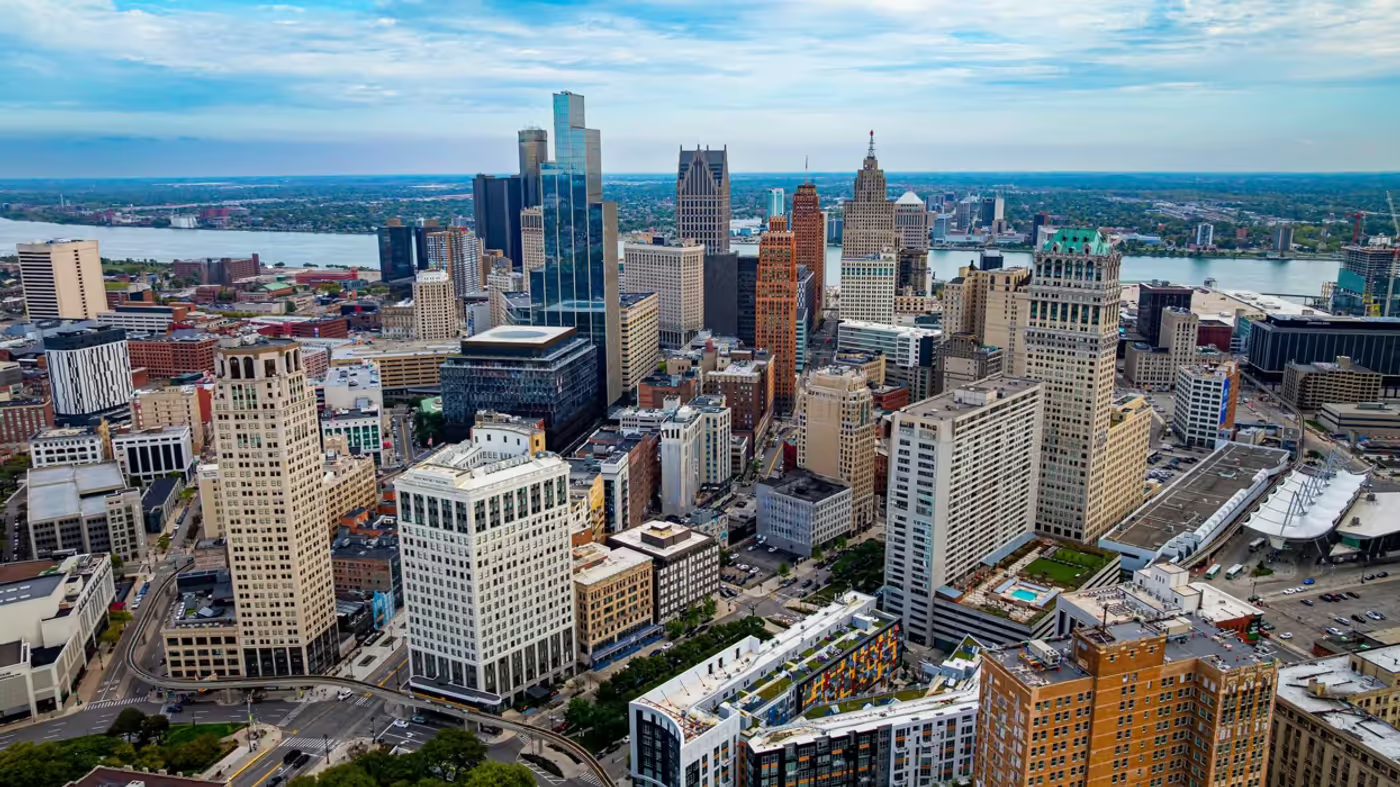
Detroit, Wayne County

Serving Detroit & Wayne County

Serving Clients for 13 YearsWayne CountySuper Lawyers Rising StarAvvo 10.0

An Uber or Lyft crash in Detroit is a Michigan no-fault car crash with one added question that decides what the claim is worth: what was the app doing at the moment of impact? If a ride had been accepted or a passenger was on board, a $1 million policy applies. If the driver was logged in and waiting, only the Act’s minimum limits apply, $50,000 per person and $100,000 per accident (MCL 257.2123(2)). If the app was off, the driver’s personal policy applies, and that policy may exclude rideshare driving altogether. Uber and Lyft hold the record that answers the question, and they do not volunteer it. Everything else about the case, who pays your medical bills, whether the company itself can be sued, how a Detroit court handles the arbitration clause in the app’s terms, follows from that first answer.

ATLAW is a personal injury firm at 3 Parklane Boulevard in Dearborn, minutes from downtown Detroit. In 13 years the firm has handled more than 10,000 cases and recovered more than $100 million for clients. Our Michigan Uber and Lyft accident lawyer page covers the Transportation Network Company Act and the three insurance periods in full, our Detroit car accident page covers the no-fault rules for any Detroit crash, and our Detroit page covers every kind of injury claim in the city; this page covers what is particular about a rideshare crash in Detroit. The first conversation is free: (313) 406-7606.

Rideshare crashes in Detroit by the numbers

MeasureFigureSource
Detroit crashes / injured / killed, 202424,321 / 8,872 / 104MSP Michigan Traffic Crash Facts, city profile
Wayne County crashes / injured / killed, 202450,355 / 16,458 / 177MSP, Michigan Traffic Crash Facts 2024
Wayne County alcohol-involved crashes, 20241,331MSP 2024
Pedestrian-involved crashes in Detroit, 2024420MSP, Pedestrian Crash Report 2020–2024
Required coverage, ride accepted or passenger on board$1,000,000 combined bodily injury and property damage, plus no-fault PIP and PPIMCL 257.2123
Required coverage, app on and waiting$50,000 per person / $100,000 per crash / $25,000 property damage, plus PIP and PPIMCL 257.2123
Required coverage, app offDriver’s personal policy only ($250,000 / $500,000 by default; as low as $50,000 / $100,000 if elected)MCL 500.3009(1), (5)
Detroit drivers uninsured before the 2019 reformAbout 60 percent, per state regulatorsMichigan DIFS, citing a 2019 University of Michigan estimate

Rideshare vehicles are not counted separately in the State Police data. What the data does show is where and when Detroit’s crashes happen, and rideshare drivers work exactly those places and hours: downtown and Midtown on game and concert nights, the Greektown and Corktown bar districts after midnight, I-94 to and from Detroit Metropolitan Airport, and the arterials in between, with a phone mounted on the dash.

The three periods, and how to prove which one applied

Michigan regulates Uber, Lyft, and similar companies as transportation network companies under 2016 PA 345, MCL 257.2101 and following. The Act requires insurance in three periods (MCL 257.2123):

PeriodWhat the driver was doingCoverageWho provides it
App offPersonal drivingDriver’s personal policy; Michigan minimum $50,000 / $100,000Driver’s insurer, which may exclude rideshare use
App on, no ride acceptedLogged in, waiting for a request$50,000 per person / $100,000 per crash / $25,000 property damage, plus PIP and PPIUber or Lyft, or the driver’s rideshare endorsement
Ride accepted or passenger on boardEn route to pick up, or carrying a passenger$1,000,000 combined, plus PIP and PPIUber or Lyft

The moment the driver accepts a ride, the $1 million policy attaches and stays attached until the passenger is dropped off. The gap period, app on with no ride, has coverage only at Michigan’s minimums, which is why a serious injury in that period usually turns on the injured person’s own uninsured and underinsured motorist coverage.

Proving the period. Uber and Lyft keep trip logs, GPS traces, and timestamps for every driver session. We send a preservation letter to the company and its insurers for the trip data, followed by a subpoena if necessary. A driver who says “I was off the app” is confirmed or contradicted by the record. Screenshot the trip screen, the driver’s name and photo, the plate, the route, and the time before you leave the scene, if you can; it is the one piece of evidence the companies will not preserve for you.

Who pays your medical bills

If you were a passenger. Michigan no-fault pays your medical expenses and wage loss regardless of fault, but being a paying customer does not put Uber’s insurer first in line. In general, your own auto policy pays first, or a policy held by your spouse or a relative you live with; if there is none, you claim through the Michigan Assigned Claims Plan (MCL 500.3114, as amended by 2016 PA 345; MCL 500.3172). In Detroit, where many passengers have no auto policy and no insured household member, the rideshare policy’s PIP is reached more often than in the suburbs, and the Assigned Claims Plan after it. Written notice to the responsible insurer is due within one year (MCL 500.3145(1)); see our no-fault insurance claim page.

If you were the rideshare driver. Your own policy pays PIP if it does not exclude rideshare use; if it does, the company’s policy covers PIP while the app is on. Drivers are generally independent contractors under the Act, so there is usually no workers' compensation claim, which makes the PIP claim and the claim against the at-fault driver everything. A personal policy can be rescinded if rideshare use was misrepresented when the policy was bought, which leaves the driver effectively uninsured for personal driving as well; read your policy before the crash, not after.

If you were in another car, on a bike, or on foot. Your own no-fault insurer pays your benefits, as in any crash (or the priority chain under MCL 500.3114 and 3115 for pedestrians and cyclists). The rideshare period decides which liability policy you claim against for pain and suffering. See our pedestrian accident page and bicycle accident page.

Your claim for pain and suffering

For pain and suffering and economic losses beyond no-fault, you need a threshold injury under MCL 500.3135 (death, serious impairment of body function, or permanent serious disfigurement) and three years to file (MCL 600.5805(2)). A fatal crash is brought by the estate; see our Detroit wrongful death page. Our passenger injury page covers passengers in any vehicle. The defendants:

  • The rideshare driver, covered by whichever policy applied in that period: $1 million, $50,000, or the personal policy.
  • The other driver, if someone else hit the rideshare vehicle, covered by their own policy, which in Detroit is more often the $50,000 minimum or nothing. If that driver was uninsured or fled, the rideshare policy’s UM/UIM coverage (if any) and your own UM/UIM coverage apply. See our uninsured motorist page.
  • Uber or Lyft directly, in limited circumstances. Because drivers are generally independent contractors (MCL 257.2137), the companies are not automatically liable for a driver’s negligence. They can be liable for their own: approving a driver who failed, or should have failed, the criminal and driving-record checks the Act requires before approval and annually after (MCL 257.2107); keeping a driver on the platform after impairment complaints, which the Act requires them to suspend pending investigation (MCL 257.2139); or allowing a vehicle that failed the required inspection (MCL 257.2109). These claims are contested and fact-specific.
  • The arbitration clause. Uber’s and Lyft’s terms of service require passengers to arbitrate disputes with the company. Courts have generally enforced those clauses against claims brought against the companies themselves; they do not bind your claim against the driver’s insurer or the other driver, which proceed in the Third Judicial Circuit Court like any Detroit injury suit.
Where Detroit rideshare crashes happen

Downtown and the venues. Ford Field, Comerica Park, Little Caesars Arena, the Fox, the casinos, and Huntington Place generate surges of rideshare pickups in a few blocks of Woodward, Brush, and Montcalm at the same minute. The crashes are low-speed sideswipes, rear-ends, pedestrian strikes at pickup curbs, and door strikes of cyclists.

The bar districts after midnight. Greektown, Corktown, Midtown, and Eastern Market. The rideshare driver is sober by rule (the Act imposes zero tolerance while logged on, MCL 257.2139); the drivers around them often are not. Wayne County recorded 1,331 alcohol-involved crashes in 2024. A bar that over-served the driver who hit the Uber can be liable under the dram shop act (MCL 436.1801), with a 120-day notice. See our drunk driving accident page.

The airport run. I-94 from downtown through Dearborn to the Merriman Road exit for Detroit Metropolitan Airport, at freeway speed, often with luggage and multiple passengers. These are the serious-injury rideshare cases, often involving brain and spinal injuries, and the $1 million policy is usually in force. Rideshare crashes elsewhere in the county follow the same rules; see our Wayne County page.

The freeways and arterials. I-75, I-96, the Lodge, Gratiot, Grand River, Michigan Avenue, and Jefferson, where the rideshare driver is one of many and the question is often whether the other driver was insured. See our Detroit car accident page for the roads and the intersections.

Windsor passengers. Trips to and from the tunnel and bridge carry Ontario residents, whose own coverage is under a different system and who generally have no Michigan PIP claim if they were occupying a vehicle not registered in Michigan and not insured by a Michigan-certified insurer (MCL 500.3113(c)); as rideshare passengers they claim through the chain above.

What to do after a Detroit rideshare crash

  1. Screenshot the app: trip screen, driver, plate, route, time. If you are the driver, screenshot your status and the trip log.
  2. Call 911 and get a police report. Give the officer the rideshare information so the UD-10 reflects it.
  3. Get medical care the same day.
  4. Report the crash in the app (Uber and Lyft both have in-app crash reporting), which creates a company record, and to your own insurer.
  5. Do not give a recorded statement to the rideshare company’s insurer or the other driver’s.
  6. Read your own declarations page for PIP level and UM/UIM coverage.
  7. Call a lawyer within the week, so the preservation letter for app and GPS data goes out before retention windows close.

Our full checklist covers the first day, week, month, and year.

Deadlines for Detroit rideshare crash claims

WhatWhenSource
Preservation letter for app, GPS, and trip dataDaysPractice
Written notice to your no-fault insurer1 yearMCL 500.3145(1)
UM/UIM and hit-and-run noticePer policy; often shortPolicy terms
Dram shop claim against a barWritten notice within 120 days of hiring a lawyer; suit within 2 years. Under MCL 436.1801(3), the 120 days runs from entering an attorney-client relationship.MCL 436.1801
Suit against the driver, the other driver, or the company3 yearsMCL 600.5805(2)
Wrongful death3 years, with the estate’s savings provisionMCL 600.5805(2), 600.5852

Why Detroit rideshare crash victims call ATLAW

  • An office at 3 Parklane Boulevard in Dearborn, with free surface parking; 13 years, more than 10,000 cases, more than $100 million recovered.
  • Prompt attention to identifying the coverage period and preserving the app, GPS, and trip data before it is lost.
  • Every policy in the chain read: yours, the household’s, the driver’s, the company’s, the other driver’s.
  • No fee unless we recover money for you. ATLAW advances case costs, so you pay nothing up front; the 33.3% attorney fee is calculated on the recovery after those costs are deducted, and if there is no recovery you owe no fee and no costs. The first conversation is free.
  • Consultations can be accommodated in English, Arabic, French, Mandarin, Urdu, and Spanish. We welcome clients to our Dearborn office for a consultation. If you are unable to visit, home or hospital visits can be arranged as needed.

Trusted by Clients. Rated 5 Stars.

Every testimonial represents a life changed.

From the very beginning, they made me feel like family and truly cared about every detail. Dewnya made me feel like I was her sister — she is always responsive, listens with genuine care, and makes you feel comfortable and understood. Mazen is always supportive, keeps me updated, and treats you like family, not just a client. I'm truly grateful for their kindness, humanity, and professionalism. Highly recommend.

ESEsmahanGoogle Review

I had a very positive experience working with the best lawyer Dewnya Bazzi and her entire teames. From the beginning of my case, they were professional, knowledgeable, responsive, and genuinely caring. They took the time to explain everything clearly, answered my questions, and kept me informed throughout the process.I especially appreciate the hard work and attention to detail that everyone at the office put into my case. The entire team was respectful, patient, and made me feel that my case was in good hands.I’m very grateful for the time and effort they dedicated to helping me. I would definitely recommend lawyer Dewnya Bazzi and her team to anyone looking for professional and compassionate legal representation.

ZYZ YGoogle Review

I had an excellent experience with my attorney,Dewnya, and would highly recommend her to anyone looking for a dedicated and trustworthy lawyer. My case was complicated, and I had been turned down by two other attorneys before I found her. From the beginning, she took the time to understand my situation, listened to my concerns, and never made me feel like my case was too difficult. She was professional, knowledgeable, responsive, and most importantly, she genuinely fought for me and my best interests. She stayed persistent throughout the entire process and worked extremely hard to achieve a great result. I’m truly grateful for everything she did for me and for the way she handled my case. I couldn’t have asked for a better attorney, and I highly recommend her!

BMBmcTransportLLcGoogle Review

Our Clients

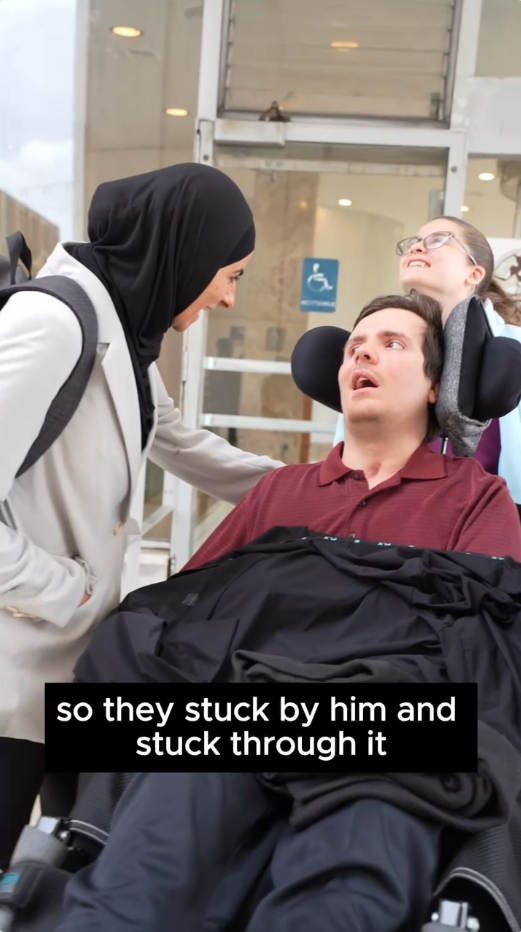
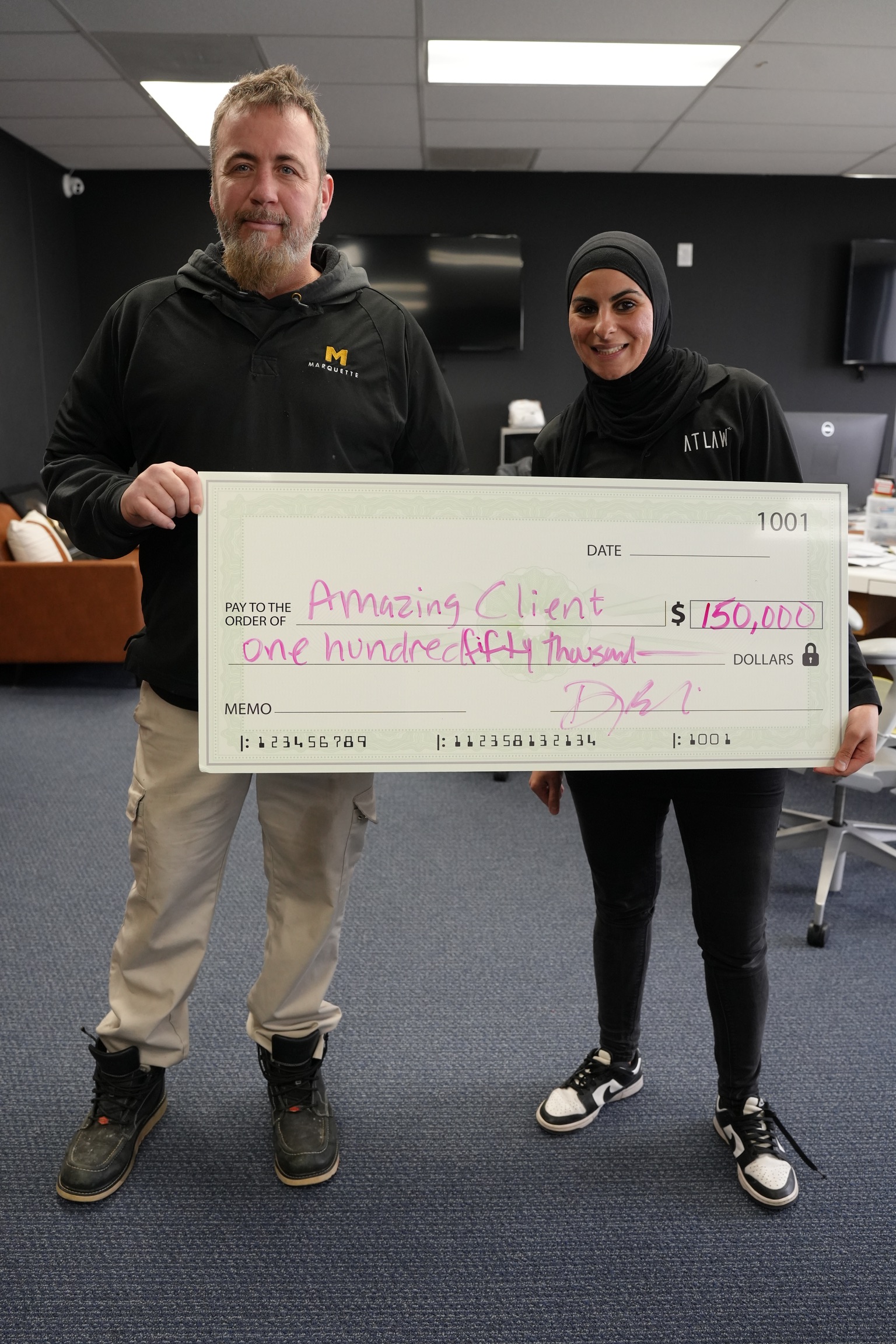
Dewnya presenting settlement check to client
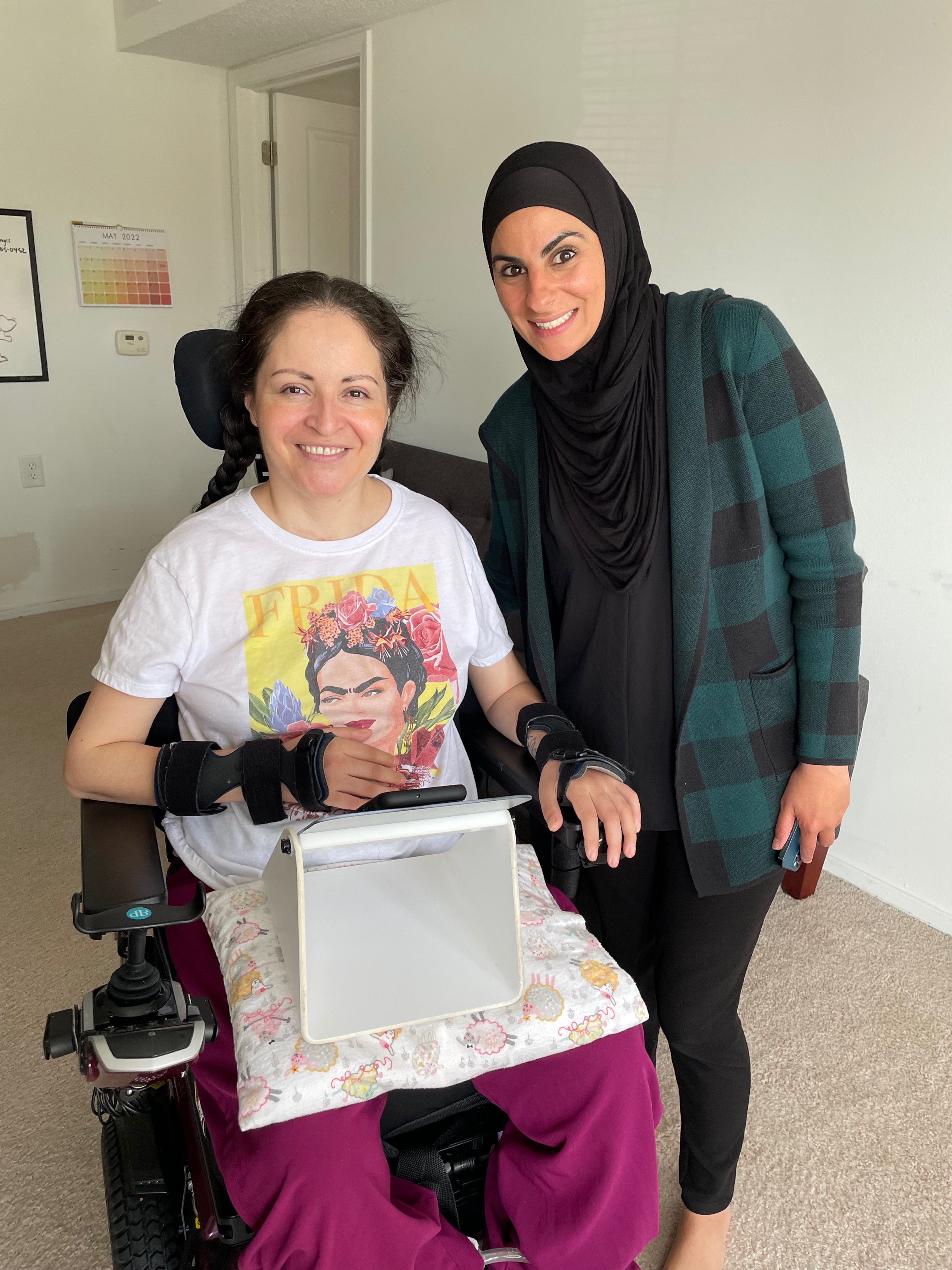
Dewnya with client at the office
Dewnya with Vincent Rutley and family
Dewnya with clients at ATLAW office
Dewnya embracing client after case resolution
Dewnya with Ali Bakri
Dewnya with client
Dewnya with client at office
Dewnya with Josh
ATLAW team and clients group photo

Testimonials or endorsements do not constitute a guarantee, warranty, or prediction regarding the outcome of your legal matter.

Frequently Asked Questions.

Your own auto insurer first, or a policy held by your spouse or a relative you live with; if there is none, the Assigned Claims Plan. Being a paying passenger does not put Uber’s insurer first for your medical bills; it does make the $1 million policy available for your injury claim.
Yes: $1 million while a ride is accepted or a passenger is on board; $50,000 / $100,000 / $25,000 while the app is on with no ride; nothing while the app is off, when the driver’s personal policy applies.
The policy that applied in that period. If a passenger was on board or a ride was accepted, the $1 million policy. The driver is generally an independent contractor, so Uber itself is usually liable only for its own negligence.
Your no-fault benefits come from your own policy (or the company’s if yours excludes rideshare use). Your injury claim is a UM claim under whatever UM coverage applies in the waiting period; the Act does not require Uber or Lyft to carry UM, so your own policy’s UM coverage is what matters.
Only for the company’s own negligence, such as approving a driver who should have failed the background check or keeping one on after impairment complaints. The arbitration clause in the app’s terms may send that claim to arbitration; your claim against the driver’s insurer is not affected.
Uber and Lyft keep trip and GPS logs. A preservation letter, and a subpoena if needed, obtains them. Your own screenshots from the scene are the backup.
No. The company’s records decide it, not the driver’s statement. And if the app was off, the driver’s personal policy applies; if that policy excludes rideshare use, the exclusion must be read against what the driver was actually doing.
One year to notify the responsible no-fault insurer, three years to sue, and as little as 120 days for a dram shop notice. The app data should be requested within days.

Talk to a Detroit Uber and Lyft accident lawyer

If you were hurt in a rideshare crash anywhere in Detroit, as a passenger, a driver, or in another vehicle, call (313) 406-7606 or send the form on this page. We will identify the period, move promptly to preserve the app data, and tell you which policies owe you benefits. The review is free, and there is no fee unless we recover money for you.

This page is general information about Michigan law as of October 2026 and is not legal advice. Crash figures are from the Michigan State Police, Michigan Traffic Crash Facts 2024. Results depend on the facts of each case, and past results do not guarantee a future outcome.

See How Much We Can Win for You.

Pay nothing unless we win.

Get a FREE Case Evaluation Today!

You Pay Nothing Unless We Win Your Case.

(313) 406-7606

We’re here to help.