If you were hurt in Detroit because someone else was careless, you may have a personal injury claim under Michigan law, and the claim has rules that start running the day you are hurt. A one-year notice to your no-fault insurer after a car crash. A 120-day notice for certain city sidewalk or roadway-defect claims. Special governmental-immunity rules may also apply when a city-owned vehicle is involved. A 182-day notice before a malpractice suit can be filed. A three-year limit on most everything else. A personal injury lawyer’s first job is to find out which of those rules apply to you, and the second is to make sure none of them run before your claim is paid.
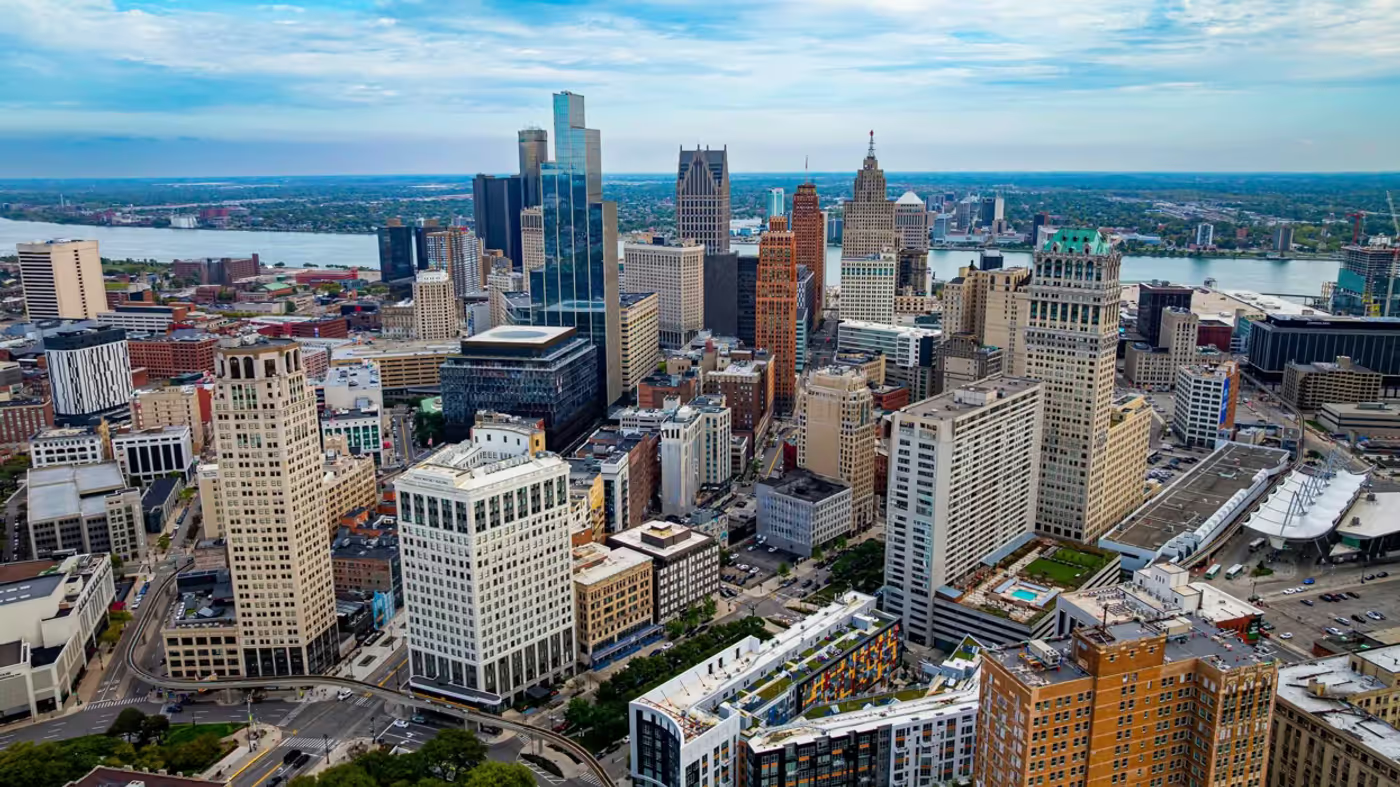
ATLAW is a personal injury firm with an office at 3 Parklane Boulevard in Dearborn, a short drive from downtown Detroit. In 13 years the firm has handled more than 10,000 cases and recovered more than $100 million for clients, many of them Detroiters hurt in crashes, falls, and the other situations described below. This page explains what a Detroit personal injury lawyer does, how a Detroit injury claim is valued and resolved, what it costs, and what to ask before you hire anyone, including us. Our Detroit page covers where the city’s injuries happen and which courts and agencies are involved; our Michigan personal injury lawyer page covers the law statewide. The first conversation is free: (313) 406-7606.
Detroit injuries by the numbers
| Measure | Figure | Source |
|---|---|---|
| Detroit crashes / injured / killed, 2024 | 24,321 / 8,872 / 104 | MSP Michigan Traffic Crash Facts, city profile |
| Wayne County crashes / injured / killed, 2024 | 50,355 / 16,458 / 177 | MSP, Michigan Traffic Crash Facts 2024 |
| Wayne County serious (“A”) injuries, 2024 | 926 | MSP 2024 |
| Pedestrian-involved crashes in Detroit, 2024 | 420 (two-thirds of Wayne County’s 637) | MSP, Pedestrian Crash Report 2020–2024 |
| Wayne County crashes involving trucks and buses, 2024 | 3,916 | MSP 2024 |
| Michigan crashes / injured / killed, 2024 | 288,880 / 71,316 / 1,099 | MSP 2024 |
| 2026 medical malpractice noneconomic damages caps | $596,400 / $1,065,000 | Michigan Treasury, MCL 600.1483 |
Wayne County produces 17 percent of Michigan’s crashes and 23 percent of its crash injuries, and Detroit produces two-thirds of the county’s pedestrian crashes. Crashes account for a large share of Detroit injury claims, but far from all of them; the cases a Detroit personal injury lawyer handles are listed below, each with the rule that makes it different.
What a Detroit personal injury lawyer does
Most people hire an injury lawyer once and never find out what the lawyer actually did. This is the work, in the order it happens.
The first week: deadlines and evidence. We identify every notice deadline that applies to your facts and calendar it. We send preservation letters: to the at-fault driver’s insurer, to the trucking company for its driver logs and electronic data, to the City for DDOT bus or police video, to the store or landlord for surveillance footage and incident reports, to the bar for its receipts if a drunk driver was involved. Detroit video, public and private, is overwritten in days to weeks; the letter has to go out before it is gone. We obtain the police report (the UD-10, from michigan.gov/tcps), the EMS run sheet, and the names of witnesses, and we photograph the scene while it still looks the way it did.
The first month: insurance. We identify every policy that may pay: an applicable auto insurance policy identified under Michigan’s no-fault priority rules, household policies, the at-fault party’s liability coverage, your uninsured and underinsured motorist coverage, the property owner’s commercial general liability policy, umbrella policies, and, where no auto policy exists, the Michigan Assigned Claims Plan (MCL 500.3172). We help identify the applicable no-fault insurer and address the claim’s notice and application requirements promptly, including the one-year written-notice requirement under MCL 500.3145(1). You stop talking to adjusters; we do that.
The treatment period: building the claim. The value of a Detroit injury claim is set mostly by the medical record, so we make sure the record is complete and the bills are paid, by no-fault or health insurance, while you treat. We collect the records and bills from Detroit Receiving, Henry Ford, Sinai-Grace, Harper, Henry Ford St. John, Children’s, and your treating physicians and therapists, document your lost wages with your employer, and, where the injury is permanent, retain the experts who will testify to future care and lost earning capacity. Under Michigan law, past and future medical expenses, lost wages, loss of earning capacity, and household services are economic damages; pain and suffering, loss of enjoyment of life, and disfigurement are noneconomic damages. In a car crash, the economic damages your no-fault insurer pays are not recovered again from the at-fault driver; the excess is (MCL 500.3135(3)(c)).
The demand and the negotiation. When your condition has stabilized or we can project its course, we send a demand with the complete record and a valuation. Michigan insurers rarely pay fair value on a first demand; most Detroit claims settle after suit is filed and discovery has shown the insurer what a jury would see. We tell you what we think the case is worth and why, and the decision to accept any offer is yours alone (MRPC 1.2).
The lawsuit. Injury suits over $25,000 are filed in the Third Judicial Circuit Court at the Coleman A. Young Municipal Center; claims up to $25,000 go to the 36th District Court. Discovery may include interrogatories, document requests, depositions, and medical examinations. The length of discovery depends on the court’s schedule and the complexity of the case. The Third Circuit may refer qualifying civil cases to case evaluation under MCR 2.403, where a three-person panel evaluates the claim. Other cases may proceed through mediation or another court-approved dispute resolution process. Since January 1, 2022, rejection of a case-evaluation award no longer automatically triggers the former MCR 2.403(O) sanctions. Cases that do not resolve through negotiation or alternative dispute resolution may proceed to trial. Most cases settle at or after one of these steps. The ones that do not are tried to a Wayne County jury.
The resolution. Before settlement funds are distributed, we review and address any applicable liens, reimbursement claims, litigation expenses, and other required deductions. These may involve Medicare, Medicaid, health insurers, ERISA plans, or other entities, depending on the case. Settlements involving minors generally require court approval under MCR 2.420. Wrongful death settlements and distributions may also require approval and distribution proceedings under MCL 600.2922. Compensatory damages received on account of personal physical injuries or physical sickness are generally excluded from federal taxable income under 26 USC 104(a)(2), subject to statutory exceptions. Interest, punitive damages, and compensation for certain nonphysical injuries may be taxable.
The cases a Detroit personal injury lawyer handles
Each of these has its own Detroit page and its own rule.
- Car accidents. Michigan no-fault: an insurer determined under Michigan’s no-fault priority rules may pay covered medical expenses and wage-loss benefits, subject to applicable limits and exclusions (MCL 500.3107); a pain-and-suffering claim against the at-fault driver generally requires an injury meeting MCL 500.3135’s statutory threshold (MCL 500.3135). Uninsured motorist coverage may be an important source of recovery when the at-fault driver is uninsured; see our uninsured motorist page and no-fault insurance claim page.
- Truck accidents. Federal motor-carrier safety requirements may apply under 49 CFR Parts 390–396. Qualifying commercial carriers are subject to financial-responsibility requirements that vary by vehicle, cargo, and operation, including a $750,000 minimum for many interstate property carriers and higher limits for certain hazardous materials.
- Motorcycle accidents. A motorcyclist struck by a car claims no-fault benefits from the car’s insurer, not the motorcycle policy (MCL 500.3114(5)).
- Pedestrian and bicycle injuries. Four hundred twenty pedestrian crashes in Detroit in 2024; no-fault priority under MCL 500.3115.
- Rideshare accidents. Uber and Lyft coverage tiers under MCL 257.2123; the trip status at the moment of the crash decides the limit.
- Bus accidents. DDOT is a City of Detroit department, so a qualifying crash involving a DDOT bus may implicate the Governmental Tort Liability Act’s motor vehicle exception (MCL 691.1405).
- Slip and fall and premises liability. Since Kandil-Elsayed v F & E Oil (2023), the open-and-obvious nature of a hazard is considered in evaluating breach of duty and comparative fault rather than automatically barring the claim. City sidewalks fall under the two-inch rule and 120-day notice (MCL 691.1402a, 691.1404); Detroit’s ordinance also places sidewalk maintenance on the adjacent owner. See our sidewalk injury page.
- Rental housing injuries. When a public housing authority is involved, governmental-immunity defenses and special notice rules may apply. A claim involving the Detroit Housing Commission must be assessed under the rules applicable to that property and entity, which may differ from those governing a private landlord.
- Dog bites. Strict liability for the owner under MCL 287.351 unless the victim was trespassing or provoked the dog.
- Medical malpractice. A 182-day Notice of Intent (MCL 600.2912b), an Affidavit of Merit (600.2912d), a two-year limit with a six-month discovery rule (600.5805(8), 600.5838a), and noneconomic damages capped at $596,400 or $1,065,000 for 2026 (600.1483). Includes birth injuries and hospital negligence.
- Nursing home abuse and neglect. Nursing home injuries may involve ordinary negligence or medical malpractice, depending on whether the alleged wrongdoing requires professional medical judgment. The classification affects applicable deadlines, notice requirements, and potentially damages limitations.
- Workplace injuries. Workers’ compensation is generally the exclusive remedy against the employer (MCL 418.131), but a third party, a driver, a property owner, a subcontractor, a product manufacturer, can be sued.
- Wrongful death. A wrongful death lawsuit is generally brought by the estate’s personal representative under MCL 600.2922 in the court with jurisdiction over the underlying claim. Separate estate proceedings may be handled in Wayne County Probate Court.
- Brain and spinal cord injuries, in any of the above, where future care is the largest element of damages.
- Social Security Disability when the injury keeps you from working for a year or more.
How a Detroit injury claim is valued
What you can recover. Economic damages: medical expenses past and future, lost wages, lost earning capacity, replacement services, and in a wrongful death case the funeral expenses and the lost financial support. Noneconomic damages: pain and suffering, mental anguish, loss of enjoyment of life, disfigurement, and in a wrongful death case the loss of society and companionship. Michigan generally does not award damages designed solely to punish a defendant in ordinary negligence cases; exemplary damages may be available in appropriate circumstances as compensation for certain injuries.
What reduces it. Your own share of fault reduces your recovery by that percentage, and if you were more than 50 percent at fault, noneconomic damages are barred entirely (MCL 600.2959). Insurers in Detroit lead with comparative fault, the pedestrian outside the crosswalk, the fall the plaintiff “should have seen,” the car that “could have avoided it,” so the evidence of the first week matters. Under MCL 600.6303, qualifying collateral-source benefits may reduce the economic-damages portion of a judgment. The calculation depends on applicable statutory exclusions, premiums, liens, and reimbursement rights. Medical malpractice noneconomic damages are capped, and certain product-liability claims also have statutory damages limitations. Other personal injury claims may not be subject to those same statutory caps.
What the defendant can pay. Available insurance can substantially affect the practical recovery in an injury case. Michigan’s default bodily-injury liability limits are $250,000 per person and $500,000 per accident, although drivers may select lower limits. Other potentially available sources include umbrella coverage, UM/UIM benefits, employer coverage, or a liable defendant’s assets. Finding every policy, including your own underinsured motorist coverage, umbrella policies, and the employer’s policy when the driver was working, is the part of valuation that changes outcomes most in Detroit.
What the medical record says. Medical records play an important role in evaluating the injury and its consequences: the diagnosis, the imaging, the treatment, the gaps, and what you told each provider. We make sure the record is complete and accurate, and we do not let an insurer’s one-time examiner under MCL 500.3151 substitute their opinion for your treating physician’s without a fight.
What a Detroit personal injury lawyer costs
Michigan caps contingency fees in personal injury cases at one-third of the net recovery (MCR 8.121), and that is the fee in nearly every Detroit injury case. ATLAW advances case costs, so you pay nothing up front; the 33.3% attorney fee is calculated on the recovery after those costs are deducted, and if there is no recovery you owe no fee and no costs. The fee agreement must be in writing; read it for how costs (filing fees, records, experts, depositions) are handled, because that varies by firm and is where the real differences are.
Questions to ask before you hire a Detroit personal injury lawyer
- Who will handle my case day to day, and will I have their direct number? Your case will be handled by the attorney assigned to oversee your matter. You will also have a dedicated Client Advocate who will serve as a point of contact, provide updates on your case’s progress, and assist with questions throughout the process. Our team will explain how to reach your assigned contacts and the best ways to communicate with them.
- How many cases like mine have you handled, and in which court? A Detroit case will be in the Third Circuit or the 36th District.
- What are the deadlines in my case, and when will the notices go out?
- What is your fee, and how are costs handled if we lose?
- Will you try the case if the insurer will not pay fair value? Insurers know which firms try cases.
- What do you think my case is worth, and what would change that? A lawyer who promises a number at the first meeting is guessing.
Deadlines in Detroit personal injury cases
| Claim | Deadline | Statute |
|---|---|---|
| Written notice to your no-fault insurer | 1 year from the crash | MCL 500.3145(1) |
| Sidewalk, road, or public building claim against the City of Detroit or Wayne County | Written notice within 120 days | MCL 691.1404, 691.1406 |
| Claim against MDOT or the State | Qualifying highway-defect claim: written notice within 120 days, filed in the Court of Claims; other personal-injury claims against the State may be subject to a six-month Court of Claims notice requirement | MCL 691.1404, 600.6431 |
| Dram shop claim against a bar | Written notice within 120 days | MCL 436.1801 |
| Medical malpractice | Generally 2 years, with a required advance Notice of Intent, a limited 6-month discovery rule, and a general 6-year statute of repose; statutory exceptions and notice-related tolling may apply | MCL 600.2912b, 600.5805(8), 600.5838a |
| Most other injury claims (crash, fall, dog bite, product) | 3 years | MCL 600.5805(2) |
| Wrongful death | Deadline depends on the underlying cause of action and when it accrued; an estate-representative savings provision may apply | MCL 600.5805(2), 600.5852 |
| Injured child | Generally one year after turning 18 if the ordinary limitations period has already expired; the original period may run longer, and medical malpractice and certain other claims have special rules | MCL 600.5851 |
Why Detroiters call ATLAW
- An office at 3 Parklane Boulevard in Dearborn, with free surface parking; walk-in visitors are welcome. Thirteen years, more than 10,000 cases, and more than $100 million recovered for clients.
- Daily work in the Third Circuit, the 36th District, and the Wayne County Probate Court, and with the Assigned Claims Plan, the City’s law department, DDOT, and the insurers that write Detroit policies.
- Preservation letters and notice filings in the first week.
- Every policy in the household read before the claim is valued.
- No fee unless we recover money for you. ATLAW advances case costs, so you pay nothing up front; the 33.3% attorney fee is calculated on the recovery after those costs are deducted, and if there is no recovery you owe no fee and no costs. The first conversation is free.
- Languages. Consultations and intake are available in English, Arabic, French, Mandarin, Urdu, and Spanish.
- Consultations. We welcome clients to our Dearborn office for a consultation. If you are unable to visit, home or hospital visits can be arranged as needed.